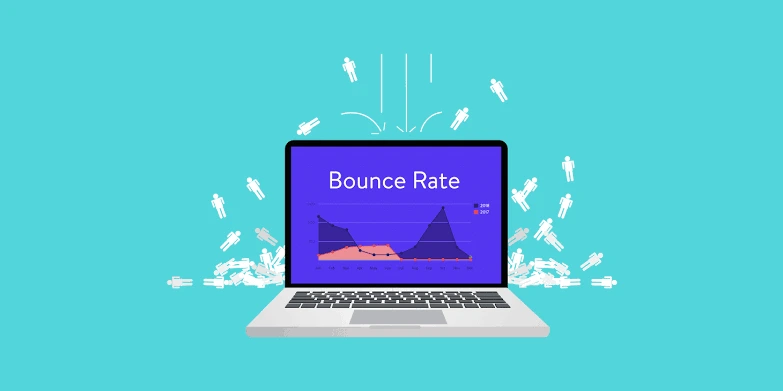
Hundreds of thousands of people may visit a website every month, but traffic does not equal success by itself. The key thing is how the visitors who come to your site interact with it. Your business is probably facing a high bounce rate on your Dubai website if users depart without clicking to other pages, filling out forms, or taking actions. Having a site with an optimal bounce rate is necessary for Dubai website owners to enhance user experience and boost conversions.
The digital market of Dubai is a tough place. Companies spend money on search engine optimization (SEO), paid ads, content promotion, and web design in order to get traffic. Nevertheless, keeping people at the front door is as critical as directing traffic. Tracking the site engagement metrics UAE companies depend on to analyze data can impart some invaluable insights into user behavior.
In this guide, you will come to know about what bounce rate is, what a good bounce rate is, and how companies can reduce website bounce rate UAE.
What Is Website Bounce Rate?
The bounce rate is the number of visitors who visit a webpage and leave without doing anything else on the website.
For example:
- A visitor lands on your homepage and leaves immediately.
- A user reads a blog post and exits the website.
- Someone visits a service page but does not click to another page.
These visits are counted as bounces. Bounce rate is one of the most important website engagement metrics UAE businesses monitor because it provides insight into visitor satisfaction and content relevance.
A high bounce rate of the Dubai website often suggests that visitors are not finding what they expected or that the page experience needs improvement.
Why Bounce Rate Matters for Dubai Businesses
Consumers in Dubai are very demanding when looking on the web. They want websites to load within seconds, work flawlessly on mobile devices, and find relevant information in no time. And if a website fails to deliver against those expectations, visitors often leave and go somewhere else.
Increased Competition
Almost every industry in Dubai has strong online competition.
Examples include:
- Real estate
- Healthcare
- Tourism
- Education
- E-commerce
- Financial services
A poor user experience can quickly drive customers elsewhere.
Better Marketing Performance
Businesses invest significant budgets into digital marketing campaigns.
These may include:
- Google Ads
- SEO
- Social media advertising
- Email marketing
A high bounce rate can reduce the return on that investment.
Improved Customer Experience
Tracking website engagement metrics UAE allows companies to identify and fix problems before they impact sales.
How Google Analytics Measures Bounce Rate
Historically, bounce rate was one of the most commonly tracked metrics in Google Analytics. With Google Analytics 4 (GA4), Google now focuses more on engagement rate, but bounce rate can still be viewed as the inverse of engagement.
For businesses tracking a Google Analytics bounce rate Dubai campaign, the metric helps identify:
- Pages are losing visitors quickly
- Traffic sources with poor performance
- User experience problems
- Landing pages needing optimization
Google Analytics allows businesses to compare bounce rates across channels such as:
- Organic search
- Paid ads
- Social media
- Email marketing
- Referral traffic
This makes it easier to understand where improvements are needed.
What Is a Good Bounce Rate for a Dubai Website?
There is no single bounce rate that applies to every website. Different industries and website types have different averages.
Generally:
- 20%–40% = Excellent
- 41%–55% = Good
- 56%–70% = Average
- Above 70% = Needs Improvement
Service Websites
Service-based businesses often see bounce rates between: 30%–55%
E-commerce Websites
Online stores typically perform best with: 20%–45%
Blog Websites
Informational articles may naturally experience: 60%–80%
This is because users often read one article and leave.
For most Dubai business websites, a bounce rate between 30% and 55% is considered healthy. If your bounce rate exceeds 70% consistently on important sales pages, it may indicate usability or relevance issues.
Common Reasons for High Bounce Rates
Understanding why visitors leave is the first step toward improvement.
Slow Website Speed
Speed remains one of the biggest reasons users abandon websites. Google research has consistently shown that as page load time increases, the probability of users leaving rises dramatically.
Dubai users expect fast-loading websites on both desktop and mobile devices. If pages take more than three seconds to load, engagement often declines significantly.
Poor Mobile Experience
Mobile traffic dominates internet usage across the UAE. A website that looks perfect on desktop but performs poorly on smartphones can drive bounce rates much higher.
Common issues include:
- Small text
- Difficult navigation
- Slow mobile loading
- Unresponsive layouts
Irrelevant Traffic
Sometimes the problem is not the website itself. Poorly targeted advertising campaigns may bring visitors who are not genuinely interested in your services.
For example, attracting general international traffic when your business serves only customers can increase the bounce rate of Dubai website.
Weak Content
Visitors leave quickly when the content:
- Does not answer their questions
- Lacks credibility
- Appears outdated
- Is difficult to read
Content should provide immediate value and match user intent.
Confusing Navigation
Users should instantly understand where to go next. Complex menus and unclear website structures often increase abandonment rates.
Too Many Pop-Ups
Aggressive pop-ups may interrupt the user experience. While lead capture forms are useful, excessive interruptions often drive visitors away.
Industry-Specific Bounce Rate Benchmarks
Different industries attract different user behaviors.
Real Estate Websites
Property buyers usually compare multiple listings.
Typical bounce rate: 35%–55%
Healthcare Websites
Patients often explore services before booking appointments.
Typical bounce rate: 40%–60%
Tourism Websites
Travelers usually browse multiple pages and packages.
Typical bounce rate: 35%–55%
Educational Institutions
Students often compare courses and admissions information.
Typical bounce rate: 40%–60%
Online Stores
Shoppers tend to explore product pages.
Typical bounce rate: 20%–45%
Comparing your bounce rate of Dubai website with industry averages provides more meaningful insights.
How to Reduce Website Bounce Rate UAE Businesses Experience
Many bounce rate issues can be fixed through practical improvements.
Improve Page Speed
Fast websites keep users engaged. Speed improvements include:
- Compressing images
- Browser caching
- Upgrading hosting
- Minimizing scripts
- Content delivery networks (CDNs)
- Code optimization
Even small improvements can significantly reduce abandonment.
Create Stronger Headlines
Your headline determines whether visitors continue reading. Effective headlines should:
- Address a problem
- Promise a solution
- Match search intent
Visitors should immediately understand the value of your page.
Enhance Mobile Experience
Mobile optimization should be a priority. Important improvements include:
- Responsive design
- Fast loading pages
- Easy navigation
- Clickable buttons
Create Better Content
The first screen users see matters most. So, content should be relevant, helpful, easy to read, and well-structured.
Include:
- Clear messaging
- Benefits
- Trust signals
- Strong visuals
- Call-to-action buttons
Use Internal Links
Internal links encourage users to visit additional pages. Benefits include:
- Better engagement
- Longer sessions
- Improved navigation
These strategies can effectively reduce website bounce rate UAE.
Use Engaging Visual Content
Images, videos, infographics, and interactive elements can improve user engagement substantially. Visual content often keeps visitors on the page longer.
Match Search Intent
A common cause of high bounce rates is a mismatch between search intent and page content. If users search for pricing information but land on a generic service page, they may leave immediately. Content should align closely with visitor expectations.
The Connection Between Bounce Rate and SEO
Many business owners wonder whether bounce rate directly affects rankings. Google has never confirmed bounce rate as a direct ranking factor. However, user experience signals remain important.
Better User Experience
When visitors stay longer:
- They view more pages
- They engage with content
- They are more likely to convert
Improved Engagement
Strong engagement often correlates with:
- Better rankings
- More traffic
- Higher conversions
Stronger Content Signals
Content that satisfies user intent tends to perform better over time. Improving website engagement metrics UAE can contribute to stronger overall SEO performance.
Important Website Engagement Metrics Beyond Bounce Rate
The bounce rate of Dubai website is valuable, but it should not be viewed in isolation.
- Average Engagement Time: Measures how long users actively engage with content.
- Pages Per Session: Shows how many pages users view during a visit.
- Conversion Rate: Measures completed actions such as purchases, form submissions, calls, and bookings.
- Scroll Depth: Shows how far visitors scroll down a page.
- Returning Visitors: Indicates loyalty and ongoing interest.
Combining multiple website engagement metrics UAE provides a clearer picture of performance.
Signs Your Website Needs a Bounce Rate Audit
Some warning signs suggest immediate action is required.
- Sudden Bounce Rate Increase: Unexpected spikes often indicate technical issues, tracking problems, and user experience changes.
- Declining Leads: If traffic remains stable but leads decrease, the bounce rate may be contributing.
- Poor Mobile Performance: High mobile bounce rates often signal usability problems.
- Low Time on Site: Visitors leaving within seconds may indicate content or design issues.
A professional high bounce rate fix Dubai strategy typically begins with a comprehensive website audit.
A Practical Bounce Rate Improvement Strategy
If your business wants a structured approach to improving engagement, follow these steps:
Step 1: Audit Analytics
Review your top landing pages and identify pages with the highest bounce rates.
Step 2: Analyze User Behavior
Use heatmaps and session recordings to understand visitor actions.
Step 3: Improve Content Quality
Update outdated information and ensure pages satisfy search intent.
Step 4: Optimize Technical Performance
Focus on speed, mobile usability, and Core Web Vitals.
Step 5: Strengthen Calls to Action
Provide clear next steps throughout the page.
Step 6: Test Continuously
A/B testing helps identify what improves engagement and conversions.
Businesses that consistently optimize user experience often see measurable reductions in bounce rates over time.
Conclusion
Bounce rate is one of the key performance indicators of a website’s success. Every industry has its benchmarks, but businesses must understand why visitors leave and how to improve user experience. A healthy bounce rate of Dubai website is very important and usually higher if website owners are doing things right, like relevant content, fast loading/response times, easy navigation, and mobile performance. Regular monitoring of the Google Analytics bounce rate Dubai reports can help spot weaknesses before they start to affect conversions.
With the right optimization strategies in place, UAE businesses can improve engagement metrics on their websites, thereby reducing bounce rates of UAE visitors. The objective is not just to decrease bounce rate stats but to make a website that instantly retains the information and attention of users, thereby generating trust, credibility, and aiding long-term profitability for your business. So, hire a professional web designer in Dubai, Saad Ashraf, to build a high-performing website!
FAQs
1. What is considered a good bounce rate for a Dubai business website?
A bounce rate above 55% is considered poor (but also varies by industry and the type of website you have), while a good number usually falls in-between 40% to 55%.
2. How can I reduce website bounce rate UAE?
Things you can improve, like page speed, mobile-friendliness, and valuable content, in addition to website navigation.
3. Does a high bounce rate hurt SEO rankings?
Not directly. Google does not use bounce rate as a ranking factor. However, poor user engagement can negatively impact overall SEO performance if visitors consistently leave without interacting with your content.
4. Why is my Google Analytics bounce rate so high?
Common causes include slow-loading pages, irrelevant traffic, poor content quality, weak mobile experience, confusing navigation, or landing pages that do not meet visitor expectations.
5. Which metrics should I track along with bounce rate?
You should also be tracking the engagement time, pages per session, conversion rate, scroll depth, and returning visitor rates.
6. Can paid advertising increase bounce rate?
Yes. If ads target the wrong audience or the landing page does not match the advertisement message, visitors may leave immediately, resulting in higher bounce rates.