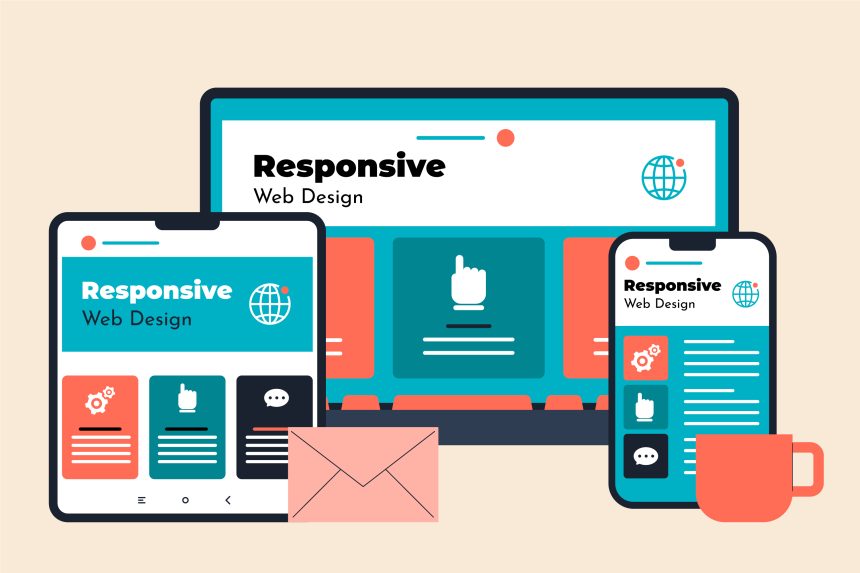
The use of mobile internet has overtaken the use of desktops in the world. A lot of companies are losing their potential customers because of ill-optimized websites. I have seen brands fail due to the failure to make their websites adaptable to smartphones. Indicatively, bounce rates on one retailer were more than 70 percent before the redesign of their site. The solution to this issue is the responsive web design that will automatically adapt the layouts to all devices. I have found that mobile users like websites that load quickly and show content effectively. The expectations of the users will be even greater in 2026. Responsiveness enhances usability, interaction, and the rate of conversion. Companies that do not optimize on mobile are disadvantaged in the competitive markets. This guide discusses the importance of responsive design and how companies can implement it.
What is Responsive Web Design and Its Importance
Responsive web design is a web design that changes websites to various screen sizes. I have done the same with various clients, and it has worked very well. As an example, an online retailer boosted mobile sales by 35 percent following a redesign. Professionals suggest fluid grids, flexible images, and media queries to enhance display. It makes the content readable without the use of zoom or horizontal scrolling. Businesses are able to have a consistent branding across all devices. Responsive websites lower the maintenance costs as a single design is applicable to all screens. The search engines will rank mobile-friendly sites in 2026. The user experience is improved with faster loading times and easy navigation. This practice facilitates conversions and makes people visit repeatedly.
Key Benefits of Responsive Design for Mobile Users
There are several benefits of responsive web design. These advantages are proven by my experience as they enhance user satisfaction and business performance. Some key benefits include:
- Growing loading rate and enhanced performance on every device.
- Improved readability without zooming or scrolling.
- Improved search engine ranking and organic traffic.
- Mobile and desktop similar brand presence.
- Less bounces and more conversions.
To illustrate, the organic traffic of a client in Dubai went up by 50 percent with the adoption of responsive design. Mobile users took more time to browse and transact their business. Convergence and consistency enhance trust and loyalty. These advantages render the responsive design essential in 2026. Mobile optimization is something that businesses cannot do without. Streamlined websites motivate the users to connect, comment, and make purchases. Responsive design is an investment, which is a factor that spurs quantifiable business development.
Challenges Mobile Users Face Without Responsiveness
Mobile users face navigation and readability issues on non-responsive sites. I have seen clients lose over 40 percent of mobile traffic due to these problems. For instance, buttons that are too small or layouts that break frustrate users. Slow-loading pages also lead to abandoned sessions. Poor mobile experiences reduce engagement and lower conversion rates. Experts recommend testing websites across devices to identify issues. Practical steps include improving images, simplifying menus, and prioritizing critical content. Businesses must consider these challenges when designing websites. Ignoring them risks brand credibility and customer trust.
Speed and Performance Role in Mobile Responsiveness.
The speed of a page also plays a big role in the satisfaction of mobile users. I have enhanced the load time for customers with optimized images and caching. Indicatively, the number of checkout completions increased by 25 percent on an e-commerce site when it was optimized. Professionals recommend using a minimum of heavy scripts and using browser caching. Speedier websites lower the bounce rates and enhance search engine positioning. The speed of connection used by mobile users is often different, and performance is important. Some practical advice would be file compression, laziness in loading images, and shortening the response time of the server. Websites that perform well keep the visitor and promote a repeat visit.
Improvement in User Experience and Navigation.
Mobile users have a better time navigating a responsive design. I have also reformatted websites to make sure that the menu and links are readily available. Examples in practice can be sticky-headed and simplified buttons. Easy navigation eliminates confusion and enhances task performance. Researchers focus on intuitive designs that are screen-responsive. Touch-friendly and similar designs are more popular with mobile users. Good UX results in increased time of browsing and increased engagement. Responsive sites scale down images, text, and interactive features to be mobile-friendly. Companies receive fewer complaints and more positive reviews.
Combining Professional Support and Responsive Design.
Responsive design implementation is enhanced by professional assistance. Numerous companies engage the services of professionals to prevent technical problems. As an illustration, engaging a Web Designer Dubai would guarantee that branding and functionality would be well coordinated across every device. Specialized skills are offered by freelancers, too. A Freelance Web Designer Dubai is able to optimize layouts, images, and interactions for mobile users. Professional assistance helps to avoid expensive errors and provides a final product of high quality. Professionals use the industry standards and new trends to improve performance.
FAQs
Is responsive web design relevant in 2026?
It guarantees a smooth browsing experience to mobile users and enhances conversions.
Does responsive design enhance SEO?
Yes, search engines rank mobile-friendly sites.
Is it possible to make my current site responsive?
Yes, it can be made mobile-friendly by redesigning or redeveloping it.
What influence does responsive design have on user experience?
It enhances cross-platform readability, navigation and interaction.
Is it advisable to employ a professional in responsive design?
Yes, professional designers offer efficient and streamlined solutions.
What are the tools that are used to test responsiveness?
Such tools as Google Mobile-Friendly Test and BrowserStack work.
Conclusion
In 2026, mobile users will need a responsive web design. I have observed that optimized websites enhance interaction, lower bounce rates, and enhance conversions. There are actual cases of how companies enhance traffic and sales through the development of mobile-friendly services. Working with professionals will also help to make sure that responsive strategies are put into practice. Saad Ashraf is an expert who has worked in the field of guiding many brands towards seamless performance on mobile for a total of 18 years. His skills ensure that websites are streamlined, efficient, and attractive on every device. Contact SaadAshraf and convert your site into a high-performing, mobile-friendly site today.