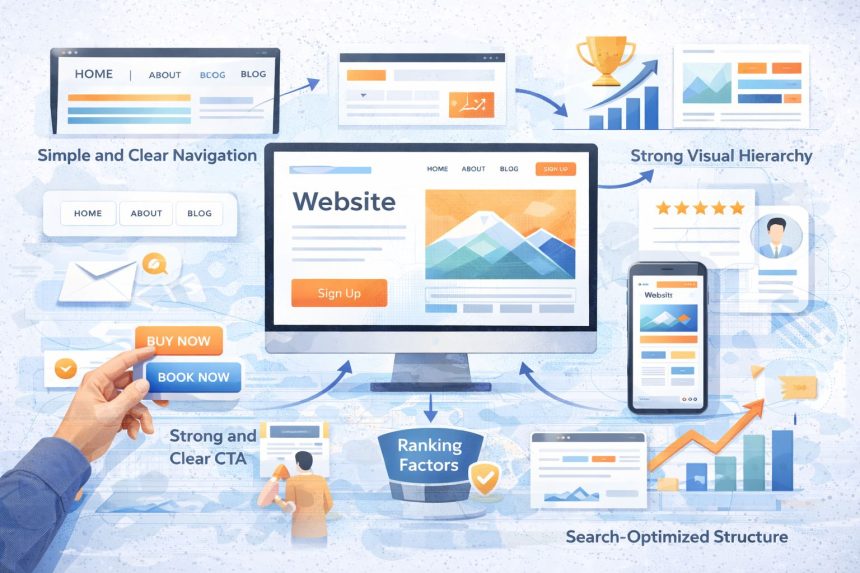
A homepage is the face of your website. It’s the first thing visitors see. You only get one chance to make a great first impression. If your homepage doesn’t catch attention, users leave. This hurts your growth and lowers your credibility.
Many websites fail at this step. They either confuse the visitor or give no real value. A homepage needs balance. It must be clean, direct, and engaging. Every word should serve a purpose. Every section should guide the visitor forward.
From working with different clients, I’ve learned what really works. Good design is not enough. It must also convert. It must feel human, yet be smart. Let’s break down the five essential elements every strong homepage needs to have.
If your homepage includes these, you’re already ahead of many others in your space.
Simple and Clear Navigation
Good navigation keeps visitors moving. It guides them without confusion. Think of it like a map. If users can’t find what they need, they will leave. Simple menus work best. Use clear names like “Services,” “About,” or “Contact.”
In many projects, I’ve seen how complex menus hurt the experience. People feel lost. They click away. But when navigation is simple, they stay longer. They explore more. They take action.
Use just a few main menu items. Keep dropdowns short. Make sure everything is easy to tap on mobile. A search bar can help on larger sites. But don’t overuse it. Let your structure speak first.
Good navigation also helps your SEO. Search engines understand your site better. That means more visibility. Keep it smart. Keep it simple. Help users find what they came for, fast.
Strong Visual Hierarchy
Visual hierarchy is how you guide the eyes. It’s how you show what matters first. Every homepage needs a clear layout. It must help visitors follow your message step by step. The biggest message should come first. Then smaller ones support it.
Fonts, colors, and spacing all play a role. Headlines should pop. Buttons should be easy to find. Sections should not blend together. They need space to breathe.
I’ve seen great content get ignored just because it looked messy. On the other hand, I’ve seen simple pages’ convert well because of clean visual flow.
Use size to show importance. Make your call to action button stand out. Don’t overuse bright colors. Use one main color and stick to it.
When users scan your page, they should know where to look next. A strong visual flow keeps them engaged. It leads them to action naturally.
Strong and Clear CTA
A call to action tells users what to do next. It’s the step after interest. Without a CTA, users leave. With a strong one, they take action. This could be booking a call, filling a form, or buying a product. Many sites hide their CTAs or use weak words. “Learn more” is not enough. Be clear. Be direct. Use phrases like “Book your free session” or “Get your free estimate.” Place your CTA near the top. Repeat it lower on the page. But don’t overdo it. Two or three well-placed buttons are enough. In one project, changing the CTA text increased clicks by 35%. The design didn’t change. Just the words. That shows how important it is. Always test different versions. Track what works. But keep one thing in mind: your CTA should focus on helping, not pushing. It should feel like the next natural step.
Builds Trust with Social Proof
Trust is everything online. Visitors don’t know you yet. They look for signs that you’re real. Social proof helps with that. These include testimonials, client logos, star ratings, or case studies.
In my projects, adding client reviews always helps. It gives people confidence. They see others had success. They feel safer working with you.
Keep it simple. Don’t write fake reviews. Use real words from real clients. If you can, add their photo or job title. This makes it more believable. One small business I worked with had great results. But no one knew it. We added three short testimonials on their homepage. That one steps improved conversions. People trust people. Show that others have chosen you and loved the outcome. Let your happy clients speak. You’ve earned that trust. Now use it.
Visually Consistent Branding
Branding gives your homepage a clear identity. It connects users to your business. Use the same colors, fonts, and voice throughout the page. If your homepage looks different from the rest of your brand, it confuses visitors. They feel unsure. But when branding is consistent, trust builds faster.
In a recent project with Web Designer Dubai, we focused on strong branding. Colors matched the logo. Tone matched the brand’s values. The result was a site that felt complete and professional. Keep your visuals aligned. Use the same button style. Match your font to your print materials. Don’t mix too many styles.
Consistency shows that you care about detail. And that detail creates trust.
Search-Optimized Structure
Search engines need clear structure. That starts from your homepage. Use headings, keywords, and alt text correctly. Keep your code clean. I’ve helped many businesses grow by fixing small SEO issues. A missing title tag. Broken links. Repeated keywords. Fixing these helps pages rank better.
Use keywords naturally. Don’t stuff them. Make each heading useful. Each image should have a proper name and alt text. Also, link to other key pages. Help both users and search bots explore your site. Add fresh content often. Keep it relevant. A clean structure isn’t just good for Google. It helps users find what they need faster too.
Conclusion
Your homepage is your digital front door—and it needs to do more than just look good. It should guide, engage, and convert. If it’s missing clear navigation, strong CTAs, or trust elements, you’re leaving money on the table.
Saad Ashraf, a seasoned digital expert with 18+ years of experience, has helped countless brands across the UAE and beyond build homepages that don’t just impress—they perform. From strategy to execution, Saad knows what works in real markets for real users.
Ready to turn your homepage into a high-converting machine?
Get in touch with Saad Ashraf today and start building a homepage that actually grows your business. Whether you’re revamping or starting fresh—he’s the expert you want on your side.